buuoltwo的博客
buuoltwo的博客
¶ 二叉树与二叉搜索树(BST)
¶ 前瞻
- 二叉树的特征
- [题]节点数计算;
- 满二叉树/完美二叉树的定义;
- 完全二叉树的定义;
- 什么是二叉搜索树(Binary Search Tree)
- BST的查找是很快的
- BST的删除是非常麻烦的
- BST的功能实现
¶ 二叉树基本概念
¶ 特征
暂缺
- [题]节点数计算; - 满二叉树/完美二叉树的定义; - 完全二叉树的定义;¶ 小结
- 最底部没有延展任何节点的是叶节点
- 度为2的非叶节点:节点有2个向下延展的节点
- 满二叉树:即 所有的非叶节点度为2
¶ BST特点,封装与实现
¶ 二叉搜索树的定义
二叉搜索树是一颗二叉树, 可以为空;如果不为空,满足以下性质:
- 非空左子树的所有键值小于其根结点的键值。
- 非空右子树的所有键值大于其根结点的键值。
- 左、右子树本身也都是二叉搜索树。
¶ BST用链表实现是较佳实践
- BST的组成
- Node : { left:Node, key:any, right:Node }
- root : Node
class Node { constructor(key) { // 创建结点构造函数 this.key = key this.left = null this.right = null } } class BinarySearchTree { // 保存根的属性 this.root = null }复制成功
1
2
3
4
5
6
7
8
9
10
11
12
13
2
3
4
5
6
7
8
9
10
11
12
13
- BST的查找是很快的
- BST的删除是非常麻烦的
¶ 向树中插入数据
- 使用递归插入数据是最方便的方法
class Node { constructor(key) { this.key = key this.left = null this.right = null } } class BinarySearchTree { root = null //插入数据,对外暴露的方法 insert(key) { let newNode = new Node(key) //this.root存在? if(!this.root) { this.root = newNode }else { // 递归开始 this.insertNode(this.root, newNode) } } //在递归的过程中,插入的数据要么往左走,要么往右走。总能插入中作叶子元素的 insertNode(node, newNode) { let { key, left,right } = node if(newNode.key < key) { //向左查找 if(node.left === null) { // 递归结束 node.left = newNode }else { // 递归继续 this.insertNode(node.left, newNode) } }else if(newNode.key > key){ //向右查找 if(node.right === null) { node.right = newNode }else { this.insertNode(node.right, newNode) } }else { console.error(`键值相等`) } } }复制成功
1
2
3
4
5
6
7
8
9
10
11
12
13
14
15
16
17
18
19
20
21
22
23
24
25
26
27
28
29
30
31
32
33
34
35
36
37
38
39
40
41
42
43
44
45
46
47
2
3
4
5
6
7
8
9
10
11
12
13
14
15
16
17
18
19
20
21
22
23
24
25
26
27
28
29
30
31
32
33
34
35
36
37
38
39
40
41
42
43
44
45
46
47
// 测试代码 class Node { constructor(key) { this.key = key this.left = null this.right = null } } class BinarySearchTree { root = null //插入数据,对外暴露的方法 insert(key) { let newNode = new Node(key) //this.root存在? if(!this.root) { this.root = newNode }else { // 递归开始 this.insertNode(this.root, newNode) } } //在递归的过程中,插入的数据要么往左走,要么往右走。总能插入中作叶子元素的 insertNode(node, newNode) { let { key, left,right } = node if(newNode.key < key) { //向左查找 if(node.left === null) { // 递归结束 node.left = newNode }else { // 递归继续 this.insertNode(node.left, newNode) } }else if(newNode.key > key){ //向右查找 if(node.right === null) { node.right = newNode }else { this.insertNode(node.right, newNode) } }else { console.error(`键值相等`) } } }复制成功
1
2
3
4
5
6
7
8
9
10
11
12
13
14
15
16
17
18
19
20
21
22
23
24
25
26
27
28
29
30
31
32
33
34
35
36
37
38
39
40
41
42
43
44
45
46
47
48
2
3
4
5
6
7
8
9
10
11
12
13
14
15
16
17
18
19
20
21
22
23
24
25
26
27
28
29
30
31
32
33
34
35
36
37
38
39
40
41
42
43
44
45
46
47
48
¶ BST-遍历
三种遍历方式:
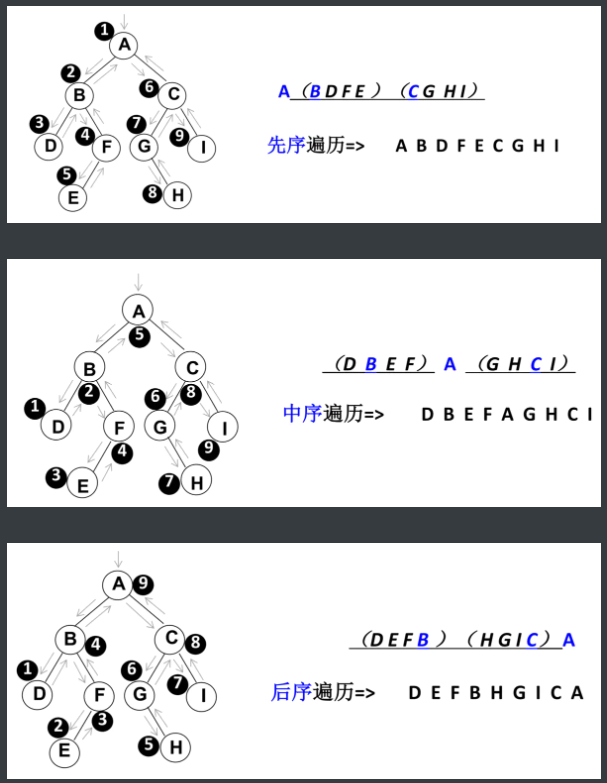
中序遍历的中是啥含义:
- 实现层面上-handler在递归代码中的位置;
- 结果层面上-根节点在遍历之后会在什么位置出现
// 先序遍历 BinarySerachTree.prototype.preOrderTraversal = function (handler) { this.preOrderTranversalNode(this.root, handler) } BinarySerachTree.prototype.preOrderTranversalNode = function (node, handler) { if (node !== null) { // 1.打印当前经过的节点 handler(node.key) // 2.遍历所有的左子树 this.preOrderTranversalNode(node.left, handler) // 3.遍历所有的右子树 this.preOrderTranversalNode(node.right, handler) } } // 中序遍历 BinarySerachTree.prototype.inOrderTraversal = function (handler) { this.inOrderTraversalNode(this.root, handler) } BinarySerachTree.prototype.inOrderTraversalNode = function (node, handler) { if (node !== null) { this.inOrderTraversalNode(node.left, handler) // 2.打印当前经过的节点 handler(node.key) this.inOrderTraversalNode(node.right, handler) } } // 后序遍历 BinarySerachTree.prototype.postOrderTraversal = function (handler) { this.postOrderTraversalNode(this.root, handler) } BinarySerachTree.prototype.postOrderTraversalNode = function (node, handler) { if (node !== null) { this.postOrderTraversalNode(node.left, handler) this.postOrderTraversalNode(node.right, handler) handler(node.key) } }复制成功
1
2
3
4
5
6
7
8
9
10
11
12
13
14
15
16
17
18
19
20
21
22
23
24
25
26
27
28
29
30
31
32
33
34
35
36
37
38
39
40
41
42
2
3
4
5
6
7
8
9
10
11
12
13
14
15
16
17
18
19
20
21
22
23
24
25
26
27
28
29
30
31
32
33
34
35
36
37
38
39
40
41
42
¶ 最大值&最小值
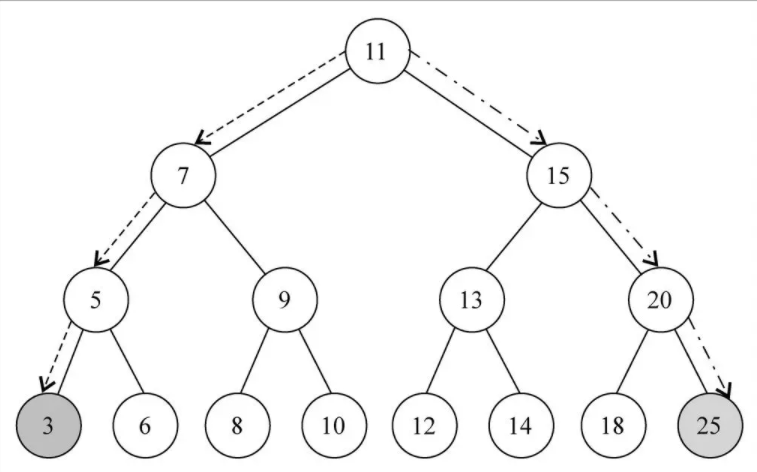
二叉搜索树的最左边的值和最右边的值。用循环,一直向左找,一直向右找。
- 代码依次向左找到最左边的结点就是最小值,
- 代码依次向右找到最右边的结点就是最大值.
// 获取最大值和最小值 BinarySerachTree.prototype.min = function () { var node = this.root while (node.left !== null) { node = node.left } return node.key } BinarySerachTree.prototype.max = function () { var node = this.root while (node.right !== null) { node = node.right } return node.key }复制成功
1
2
3
4
5
6
7
8
9
10
11
12
13
14
15
16
2
3
4
5
6
7
8
9
10
11
12
13
14
15
16
¶ 搜索特定的值
- 二叉搜索树不仅仅获取最值效率非常高, 搜索特定的值效率也非常高.
- 特定的值不断与新的current节点比较,值比较小则往左。
// 搜索特定的值-递归 BinarySerachTree.prototype.search = function (key) { return this.searchNode(this.root, key) } BinarySerachTree.prototype.searchNode = function (node, key) { // 1.如果传入的node为null那么, 那么就退出递归 if (node === null) { return false } // 2.判断node节点的值和传入的key大小 if (node.key > key) { // 2.1.传入的key较小, 向左边继续查找 return this.searchNode(node.left, key) } else if (node.key < key) { // 2.2.传入的key较大, 向右边继续查找 return this.searchNode(node.right, key) } else { // 2.3.相同, 说明找到了key return true } }复制成功
1
2
3
4
5
6
7
8
9
10
11
12
13
14
15
16
17
18
19
20
2
3
4
5
6
7
8
9
10
11
12
13
14
15
16
17
18
19
20
// 搜索特定的值-循环 BinarySerachTree.prototype.search = function (key) { var node = this.root while (node !== null) { if (node.key > key) { node = node.left } else if (node.key < key) { node = node.right } else { // 找到了匹配的叶节点 return true } } // 找到某一个叶节点,仍未找到特定的值 return false }复制成功
1
2
3
4
5
6
7
8
9
10
11
12
13
14
15
16
2
3
4
5
6
7
8
9
10
11
12
13
14
15
16
¶ BST-删除
- 查找要删除的节点
- 分类讨论(if..else if..else if...else)
- 目标节点没有子节点
- 目标节点仅1个子节点
- 目标节点有2个子节点(度为2的非叶节点)
¶ 1. 查找要删除的节点
// BinarySerachTree.prototype.remove // 希望删除,需要用三个变量 var current = this.root var parent = this.root var isLeftChild = true // 循环 while (current.key !== key) { parent = current if (key < current.key) { isLeftChild = true current = current.left } else { isLeftChild = false current = current.right } // 如果发现current已经指向null, 那么说明没有找到要删除的数据 if (current === null) return false // 得到三个变量,已查出目标current节点。... }复制成功
1
2
3
4
5
6
7
8
9
10
11
12
13
14
15
16
17
18
19
20
21
2
3
4
5
6
7
8
9
10
11
12
13
14
15
16
17
18
19
20
21
¶ 2.1.删除的结点是叶结点
// 2.1.删除的结点是叶结点 if (current.left === null && current.right === null) { if (current == this.root) { this.root == null } else if (isLeftChild) { parent.left = null } else { parent.right = null } }复制成功
1
2
3
4
5
6
7
8
9
10
2
3
4
5
6
7
8
9
10
¶ 2.2.删除有一个子节点的节点
// 2.2.删除有一个子节点的节点 else if (current.right === null) { if (current == this.root) { this.root = current.left } else if (isLeftChild) { parent.left = current.left } else { parent.right = current.left } } else if (current.left === null) { if (current == this.root) { this.root = current.right } else if (isLeftChild) { parent.left = current.right } else { parent.right = current.right } }复制成功
1
2
3
4
5
6
7
8
9
10
11
12
13
14
15
16
17
18
19
2
3
4
5
6
7
8
9
10
11
12
13
14
15
16
17
18
19
¶ 2.3. 删除目标节点有2个子节点:寻找前驱 | 后继
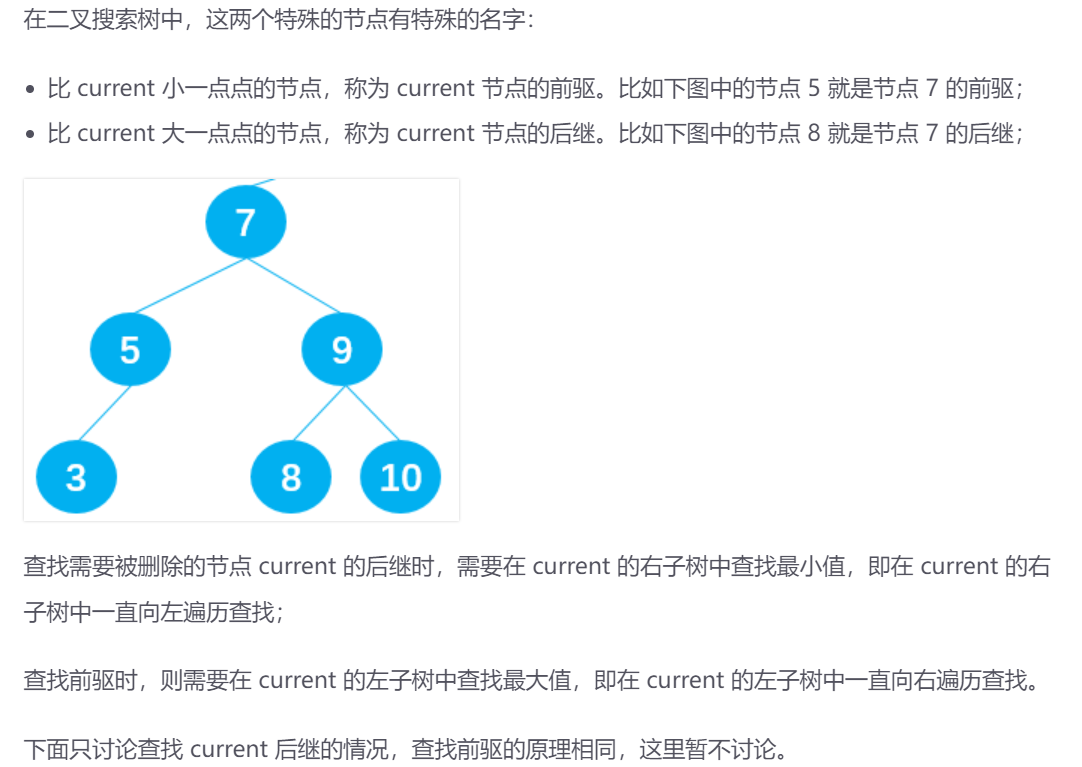
规律总结:如果要删除的节点有两个子节点,甚至子节点还有子节点,这种情况下需要从要删除节点下面的子节点中找到一个合适的节点,来替换当前的节点。
若用 current 表示需要删除的节点,则合适的节点指的是:
- current 节点的前驱: current 左子树中比 current 小一点点的节点,即 current 左子树中的最大值;
- **current 节点的后继: **current 右子树中比 current 大一点点的节点,即 current 右子树中的最小值;
删除这个节点的思路:
// 2.3.删除有两个节点的节点 else { // 1.获取后继节点 var successor = this.getSuccessor(current) // 2.判断是否是根节点 if (current == this.root) { this.root = successor } else if (isLeftChild) { parent.left = successor } else { parent.right = successor } // 3.将删除节点的左子树赋值给successor successor.left = current.left }复制成功
1
2
3
4
5
6
7
8
9
10
11
12
13
14
15
16
17
2
3
4
5
6
7
8
9
10
11
12
13
14
15
16
17
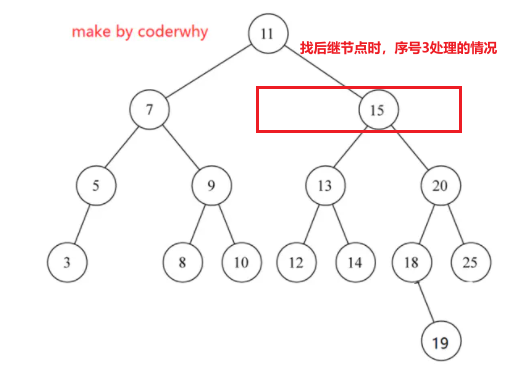
// 找后继的方法 // (循环,从current.right开始一直迭代current/successor等三个变量,一直往左找最小值) BinarySerachTree.prototype.getSuccessor = function (delNode) { // 1.使用变量保存临时的节点 var successorParent = var successor = delNode var current = delNode.right // 要从右子树开始找 // 2.寻找节点 while (current != null) { successorParent = successor successor = current current = current.left } // 3.如果是删除图中15的情况, 还需要如下代码 // ps:此时后继节点是18 // 18!=20 // 后继节点父亲的left指针不再指向后继节点,指向 后继节点.right(图中的19) // 后继节点的right指针数据已存好,改为指向 delNode.right(图中的20) if (successor != delNode.right) { successorParent.left = successor.right successor.right = delNode.right } return successor }复制成功
1
2
3
4
5
6
7
8
9
10
11
12
13
14
15
16
17
18
19
20
21
22
23
24
25
26
27
28
2
3
4
5
6
7
8
9
10
11
12
13
14
15
16
17
18
19
20
21
22
23
24
25
26
27
28
getSuccessor()后继节点图注:

¶ 删除节点完整代码
// 删除结点 BinarySerachTree.prototype.remove = function (key) { // 1.定义临时保存的变量 var current = this.root var parent = this.root var isLeftChild = true // 2.开始查找节点 while (current.key !== key) { parent = current if (key < current.key) { isLeftChild = true current = current.left } else { isLeftChild = false current = current.right } // 如果发现current已经指向null, 那么说明没有找到要删除的数据 if (current === null) return false } // 3.删除的结点是叶结点 if (current.left === null && current.right === null) { if (current == this.root) { this.root == null } else if (isLeftChild) { parent.left = null } else { parent.right = null } } // 4.删除有一个子节点的节点 else if (current.right === null) { if (current == this.root) { this.root = current.left } else if (isLeftChild) { parent.left = current.left } else { parent.right = current.left } } else if (current.left === null) { if (current == this.root) { this.root = current.right } else if (isLeftChild) { parent.left = current.right } else { parent.right = current.right } } // 5.删除有两个节点的节点 else { // 1.获取后继节点 var successor = this.getSuccessor(current) // 2.判断是否是根节点 if (current == this.root) { this.root = successor } else if (isLeftChild) { parent.left = successor } else { parent.right = successor } // 3.将删除节点的左子树赋值给successor successor.left = current.left } return true } // 找后继的方法 BinarySerachTree.prototype.getSuccessor = function (delNode) { // 1.使用变量保存临时的节点 var successorParent = delNode var successor = delNode var current = delNode.right // 要从右子树开始找 // 2.寻找节点 while (current != null) { successorParent = successor successor = current current = current.left } // 3.如果是删除图中15的情况, 还需要如下代码 if (successor != delNode.right) { successorParent.left = successor.right successor.right = delNode.right } return successor }复制成功
1
2
3
4
5
6
7
8
9
10
11
12
13
14
15
16
17
18
19
20
21
22
23
24
25
26
27
28
29
30
31
32
33
34
35
36
37
38
39
40
41
42
43
44
45
46
47
48
49
50
51
52
53
54
55
56
57
58
59
60
61
62
63
64
65
66
67
68
69
70
71
72
73
74
75
76
77
78
79
80
81
82
83
84
85
86
87
88
89
90
91
92
93
94
95
2
3
4
5
6
7
8
9
10
11
12
13
14
15
16
17
18
19
20
21
22
23
24
25
26
27
28
29
30
31
32
33
34
35
36
37
38
39
40
41
42
43
44
45
46
47
48
49
50
51
52
53
54
55
56
57
58
59
60
61
62
63
64
65
66
67
68
69
70
71
72
73
74
75
76
77
78
79
80
81
82
83
84
85
86
87
88
89
90
91
92
93
94
95
晓露寝安浅云逍遥十漾轻拟